Solutions

Solve theoperational problemfirst.

AI, automation, integration and digital transformation are tools. We apply the right combination to what actually needs to improve.

The Operational Problem

Most transformation problems are connected.

A slow process is rarely just a slow process. It usually involves fragmented information, multiple systems, manual handoffs, unclear decisions and limited visibility. Solving only one layer rarely fixes the full problem.

Operating architecture
L01People
L02Processes
L03Systems
L04Data
L05Decisions
L06Governance

StealthBox AI approaches transformation across the whole operating environment — not one layer in isolation.

A slow process may involve
  • 01Fragmented information
  • 02Multiple systems
  • 03Manual handoffs
  • 04Unclear decisions
  • 05Poor visibility
  • 06Limited automation
Four Core Solution Families

Technology with a clear operational purpose.

We combine transformation strategy, AI, automation, integration and operational intelligence around the problem that needs to be solved.

01 / 04

AI & Intelligent Automation

Apply AI and automation where they improve how people access knowledge, complete work and make decisions.

AI assistantsEnterprise knowledge systemsRAG-based retrievalWorkflow automationDocument intelligenceAgent-assisted workflowsDecision supportAI orchestrationHuman-in-the-loop AI
Typical problems
  • Employees cannot find information quickly
  • Workflows depend on repetitive manual activity
  • Decisions require gathering information from many systems
  • Documents require high levels of manual review
Potential outcomes
  • Faster access to information
  • Reduced repetitive work
  • More consistent workflows
  • Better decision support
Cross-Solution Architecture

The strongest programmes combine capabilities.

Real operational problems rarely fit neatly into one technology category. A single challenge usually needs several capabilities working together.

Example challengeReduce the time required to process a complex operational case.
01

Digital Transformation

Redesign the process.

Understand the current workflow, remove unnecessary steps and define a clearer future state before any technology is added.

02

Connected Systems

Bring required information together.

Connect the systems and data the workflow depends on so the right information is available where decisions are made.

03

AI & Automation

Assist analysis and automate repeatable steps.

Apply automation to repetitive work and AI where it improves knowledge access, analysis or execution.

04

Operational Intelligence

Track performance, exceptions and outcomes.

Measure whether the redesigned workflow is actually improving performance and surface exceptions early.

Final state

A redesigned end-to-end operating workflow.

Common Transformation Scenarios

Where StealthBox AI can help.

Practical situations where combining the right capabilities produces a clearer operational outcome.

Scenario 01

Intelligent Operations

Problem

Complex operational workflows depend on fragmented information and manual coordination.

StealthBox AI approach

Use AI, automation and integrated information to support complex operational workflows end to end.

Relevant solution families
AI & AutomationConnected SystemsOperational Intelligence
Engagement Models

Start at the right level.

Not every engagement begins with implementation. StealthBox AI meets the organisation where the problem actually is — from understanding the environment to scaling proven capabilities.

01

Discovery & Assessment

For organisations that need to understand the problem, current environment and priorities before committing to implementation.

  • Operational discovery
  • Process assessment
  • Systems review
  • Data assessment
  • AI opportunity assessment
  • Future-state design
  • Implementation roadmap
02

Pilot / Validation

For organisations that need to prove a critical use case before scaling.

  • Pilot design
  • Limited integrations
  • Workflow validation
  • AI validation
  • User testing
  • Baseline measurement
  • Success criteria
  • Security & governance validation
03

Implementation

For approved programmes ready for production delivery.

  • Architecture
  • Integration
  • Development
  • Automation
  • AI configuration
  • Testing & deployment
  • Adoption
  • Governance
04

Scale & Optimise

For organisations extending successful capabilities across more workflows, teams or business units.

  • Additional integrations
  • New workflows
  • AI expansion
  • Performance improvement
  • Governance optimisation
  • Operating-model refinement
Outcomes Framework

Measure transformation by what improves.

We do not promise universal savings. Metrics are defined against the organisation’s own baseline and target operating model.

01

Time

  • Cycle time
  • Response time
  • Processing time
  • Decision time
02

Effort

  • Manual steps
  • Administrative effort
  • Duplicate entry
  • Repetitive work
03

Quality

  • Consistency
  • Error reduction
  • Process compliance
  • Information completeness
04

Visibility

  • Operational awareness
  • Exception visibility
  • Decision traceability
  • Management reporting
05

Experience

  • Employee experience
  • Customer experience
  • Citizen experience
  • Service access
06

Control

  • Governance
  • Auditability
  • Approval integrity
  • Human oversight

These are measurement categories, not guaranteed outcomes. Improvement is measured against the organisation’s own starting point.

Solution patterns

The shapes private AI can take — not one tool for everything.

Each pattern is a concrete, deployable shape of private AI — explained through the same ten fields so a buyer can compare what actually runs locally, what data it needs, what the AI does, what the workflow does, what people still do, and how it is governed. Select a pattern to read its deployment shape.

01

Private Enterprise Copilot

An assistant that answers from your knowledge — inside your perimeter.

A private assistant that understands intent, retrieves only authorised knowledge, and answers in natural language with source attribution — without sending data to a third-party AI.

Availability

Standard across the StealthBox family; scales with the selected deployment class.

Ten-field breakdown
01Business problem
Staff send sensitive questions to public AI tools the organisation cannot govern, audit or control.
02What runs locally
Inference and retrieval run on StealthBox compute inside the customer perimeter — no data leaves to a third-party AI.
03Data & knowledge required
Approved documents, policies, procedures and structured sources — indexed with permissions and scoped by role.
04AI / model role
Understand intent, retrieve authorised context, and answer in natural language with source attribution.
05Workflow / tool role
Prepares answers and drafts; performs no system changes unless an approval path is explicitly configured.
06Human role
People review outputs and decide actions; the assistant prepares, it does not execute policy alone.
07Integration requirements
Reads from document stores, knowledge bases and authorised enterprise APIs inside the perimeter.
08Security & governance
Identity-based access, source permissions, audit of every query and retrieval, no training on customer data without approval.
09Outputs
Source-linked answers, drafts and summaries traceable to the documents they came from.
10Implementation path
Knowledge scoping → local model serving → permissioned retrieval → assistant UI → validation → controlled rollout.
Expected outcome categoriesCredible expected categories — not guaranteed numbers.
Reduced manual processingFaster information retrievalBetter knowledge accessLower external-AI exposureBetter auditability
Illustrative exampleIllustrative — not a delivered client project.

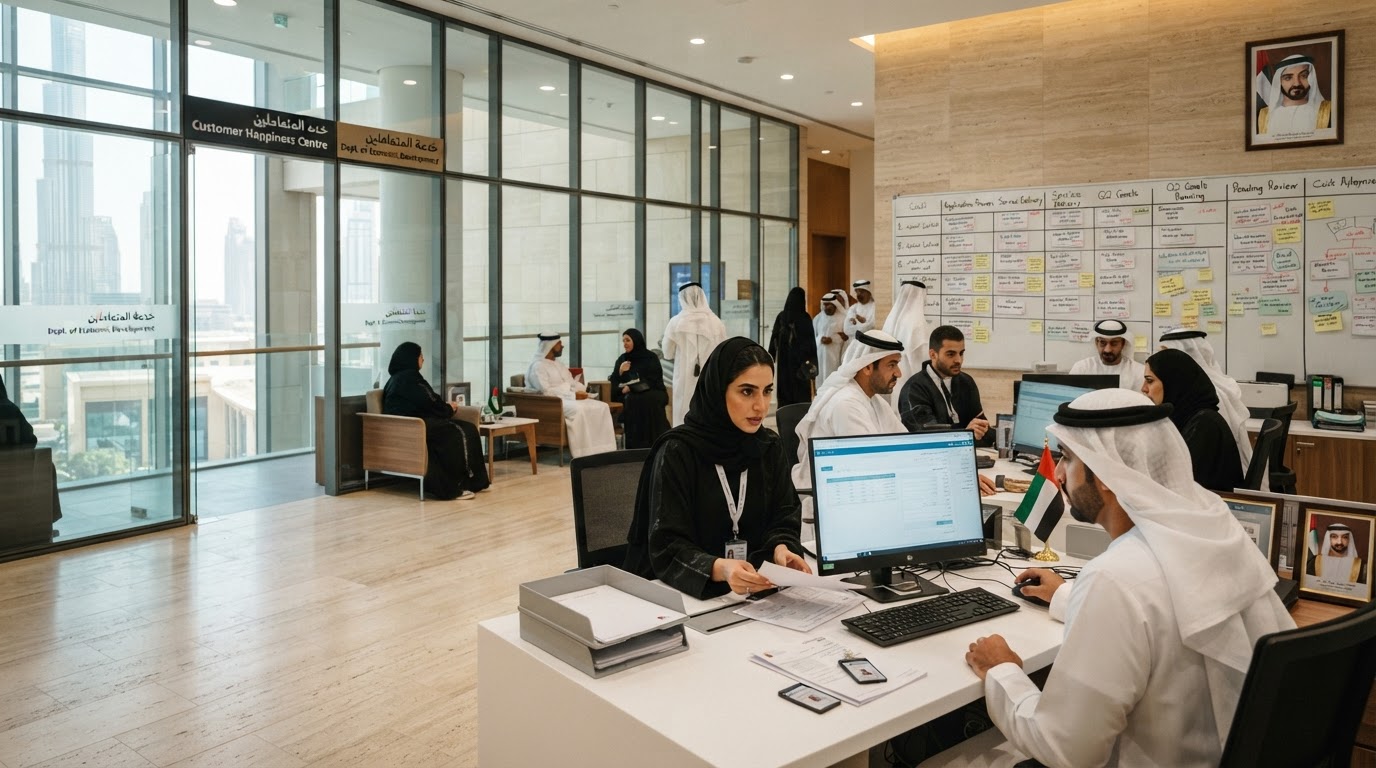
Illustrative: a ministry equips policy teams with a copilot that answers from internal regulations — without those questions ever leaving the ministry's network.

Integration, Security & Governance

Transformation must work inside the real enterprise environment.

StealthBox AI solutions are designed around existing systems, identity, security, data and governance. AI is not implemented outside governance — it becomes part of the governed operating environment.

L01

Users

The people the operating environment exists to support.

L02

Experience

Digital services, applications and AI assistants people actually use.

L03

Workflows

The decisions, rules and approvals that govern how work happens.

L04

AI & Automation

Where information becomes better decisions and faster execution.

L05

Integration

The connections that let systems work as one environment.

L06

Systems & Data

The enterprise systems and data the operation depends on.

Designed around
IdentityPermissionsSecurityData requirementsHosting requirementsAuditabilityHuman decision rightsRegulatory requirements

AI is not implemented outside governance. It becomes part of the governed operating environment.

Selected Work

Solutions in context.

Selected programmes showing how combinations of capabilities are applied to complex operational and strategic challenges.

All Programmes
Connected service redesign — StealthBox AI programme

Connected service redesign

Redesign a complex public-facing service around connected systems and reduced manual handling.

Digital transformationSystems integrationWorkflow automation
View Programme
Operational data spine — StealthBox AI programme

Operational data spine

Connect fragmented operational systems so teams work from a single, current view of the operation.

API architectureData integrationEvent-driven design
View Programme